Stuck in the Ruts: Why Old Patterns Pull Us Back
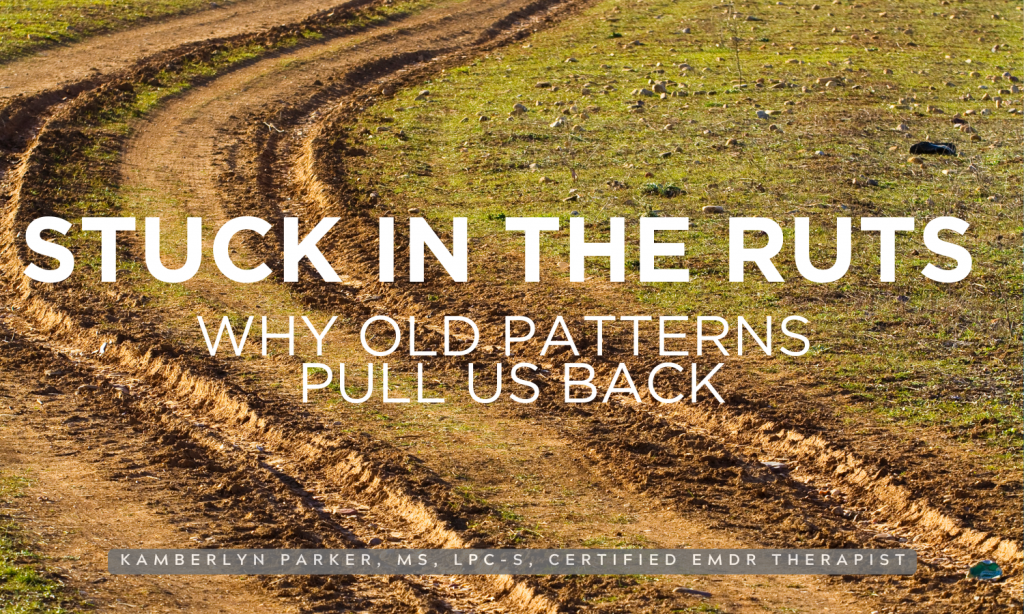
Have you ever driven down an old dirt road that hasn’t been maintained in a long time?
The tires before you have carved deep grooves into the ground. Over time, those grooves turn into ruts. When your tires fall into them, the car almost drives itself. You can hold the steering wheel, but the road decides where you go.
The deeper the ruts, the rougher the ride.
And the harder it becomes to get out.
If you’ve ever tried to steer out of deep ruts, you know what happens. The wheel jerks in your hands. The car pulls you back into the grooves you were trying to leave. It takes extra effort, focus, and sometimes a little courage to push past that resistance.
Our emotional and relational patterns can work in a similar way.
Over time, repeated experiences create pathways in the nervous system. If you spent years learning to people-please, overwork, stay quiet, or doubt yourself, those responses can begin to feel automatic. Not because you are weak. Not because you are doing something wrong.
But because those pathways have been driven many times before.
The brain and body are very good at remembering familiar roads.
Even when those roads are uncomfortable.
In trauma and stress research, we often talk about patterns and nervous system responses. When something happens again and again—criticism, pressure, instability, emotional neglect—the body adapts. It learns what helped you survive those moments.
Those survival responses become grooves in the road.
At first, they were protective.
They helped you get through something hard.
But years later, those same grooves can make life feel bumpy and restricted. You might notice yourself falling into the same reactions, even when part of you wishes you could respond differently.
And when you try to steer out of those patterns?
The pull back can feel strong.
Old beliefs might show up:
“This is just who I am.”
“Change won’t last.”
“It’s safer to stay the same.”
That doesn’t mean change is impossible.
It just means the ruts are deep.
Something else interesting happens when people finally reach smoother ground.
Sometimes it doesn’t feel safe at first.
If you’ve spent years driving on rough roads, smooth pavement can feel unfamiliar. Your body may stay tense, waiting for the next bump. You might even find yourself drifting back toward the old grooves because at least they are known.
This is one reason healing often feels strange in the beginning.
Calm can feel unfamiliar.
Rest can feel uncomfortable.
Healthy boundaries can feel risky.
Not because they are wrong—but because they are new terrain.
The good news is this: roads can be repaired.
With time, intention, and support, those old grooves can soften. New paths can form. Each time you practice a new response—setting a boundary, speaking honestly, slowing down, showing compassion to yourself—you are gently driving the tires in a different direction.
At first it may feel awkward.
You might wobble between the old ruts and the new road.
That’s normal.
Change rarely happens in one dramatic turn of the wheel. More often, it looks like small adjustments over and over again.
A little steadier.
A little smoother.
One mile at a time.
If you notice yourself stuck in familiar ruts, try starting with curiosity instead of criticism.
You might ask yourself:
- What road did I learn to drive on growing up?
- What patterns helped me survive earlier seasons of life?
- What might a smoother path look like now?
Awareness is often the first step in repairing the road.
And you don’t have to rebuild it all at once.
Remember the old saying: How do you eat an elephant? One bite at a time.
Healing often works the same way.
One insight.
One new response.
One small shift in direction.
Over time, those small shifts create an entirely new road.
And one day you may notice something surprising.
The drive feels smoother.
Your hands feel steadier on the wheel.
And the road ahead is wider than you thought.
—
This post is for educational and informational purposes only and is not a substitute for individualized therapy or medical care.